What are backlinks and why do they matter? A backlink is a link from another website to yours. Search engines treat relevant, trustworthy backlinks as votes of confidence, so they’re an important authority signal for SEO. Quality and relevance matter far more than quantity — and links should be earned, not bought.
What is a backlink?
It’s simply a link on another website pointing to a page on yours. When a reputable, relevant site links to you, it signals to search engines that your content is trustworthy and worth surfacing.
Why do backlinks matter for SEO?
They’re one of the ways search engines judge authority. A handful of links from relevant, reputable sites can carry more weight than hundreds of low-quality ones — it’s about trust, not volume.
How do I earn backlinks?
- Publish genuinely useful content worth linking to
- Get listed in legitimate local and industry directories
- Earn press, partnerships and community mentions
- Build real relationships in your industry
Should I buy backlinks?
No. Buying links violates Google’s guidelines and can trigger penalties that hurt your rankings. Earned, relevant links are slower but safe and durable; link schemes are a genuine risk.

What are keywords and how do I choose them? Keywords are the words and phrases people type into search engines. You choose them by matching real customer searches to pages on your site — favoring terms with clear buying or local intent over broad, generic words, and balancing how many people search a term against how hard it is to rank.
What are keywords in SEO?
They’re the search terms your customers actually use — from broad (‘plumber’) to specific (’emergency plumber in Oak Brook’). Specific, intent-rich phrases usually attract more qualified visitors.
How do I choose the right keywords?
- Start with terms your customers actually say
- Favor clear buying or local intent
- Balance search volume against competition
- Map each keyword to a relevant page
- Include natural variations and questions
What is search intent?
It’s the reason behind a search — to learn, compare, or buy. Matching your page to the intent (an answer for a question, a service page for ‘near me’) matters more than stuffing in the keyword.
Should I target high-volume keywords?
Not necessarily. Broad, high-volume terms are competitive and often less specific. A set of lower-volume, high-intent and local keywords frequently delivers better, more qualified traffic.

How do I get more website traffic? Traffic comes from a mix of channels: SEO and a strong Google Business Profile for organic and local search, paid ads for immediate visits, plus social, email and referrals. The durable, lower-cost route is SEO and local search; ads buy speed while that builds.
What are the main sources of website traffic?
- Organic search (SEO)
- Local search & the Google Map Pack
- Paid ads (Google, social)
- Social media
- Email and referrals
What’s the most cost-effective way to grow traffic?
SEO and a complete Google Business Profile — they compound and keep working without per-click costs. They’re slower to start, which is why many businesses run ads alongside them for immediate visits.
How long does it take to grow traffic?
Paid channels drive visits immediately; organic and local growth typically build over months and compound. Sustainable traffic is a blend of quick wins and long-term assets.
Is more traffic always better?
No — relevant traffic matters more than raw numbers. A smaller audience that actually needs your service converts better than a flood of unqualified visitors.

How do I rank #1 on Google? You earn it by being the most relevant, trustworthy and useful result for a specific search: genuinely helpful content built around what people are looking for, a fast and technically healthy site, and authority signals like links and (for local) a strong Google Business Profile and reviews. It takes time, and no one can legitimately guarantee the #1 spot.
What actually determines Google rankings?
- Relevance — does your page truly answer the search?
- Content quality — depth, accuracy, helpfulness
- Authority — links and mentions from trusted sources
- Technical health — speed, mobile, crawlability
- For local — Google Business Profile, proximity and reviews
Can anyone guarantee a #1 ranking?
No. Google’s results are dynamic and personalized, and rankings shift with competition and algorithm updates. Any agency ‘guaranteeing #1’ is a red flag — what a good partner promises is sound work and measurable progress, not a fixed position.
How long does it take to rank #1?
It varies widely by how competitive the term is. Low-competition and local searches can move in weeks to a few months; competitive national terms can take much longer. It compounds — rankings build as your site earns trust.
Should I target #1 for one keyword?
Usually no. It’s healthier to rank well for many relevant searches your customers actually use than to obsess over one term. Broad, genuine topical coverage beats chasing a single vanity keyword.
How do I get more Google reviews? Ask every satisfied customer right after a positive experience, make it effortless with a direct review link, and respond to every review you receive. Reviews should always be genuine and unincentivized — Google prohibits paying for or offering rewards in exchange for reviews.
How do I ask customers for a review?
Ask in person at a high point, then follow up with a text or email containing your direct Google review link. Timing matters — right after you’ve delivered a great result is best. A short, friendly, personal ask outperforms a generic mass message.
Can I offer a discount or incentive for reviews?
No. Google’s policies prohibit incentivized reviews — offering discounts, gifts or money in exchange for reviews can get your reviews removed or your profile penalized. You can ask freely; you just can’t pay for it.
Can I remove a bad Google review?
You can’t simply delete a negative review. You can flag reviews that violate Google’s policies (spam, fake, off-topic, profanity) and request removal, but legitimate negative feedback usually stays. The best move is a calm, professional public response that shows future customers how you handle issues.
How many Google reviews do I need?
There’s no magic number, but a steady stream of recent, genuine reviews matters more than a big pile of old ones. Consistency and recency signal an active, trusted business — aim to make review requests a routine part of your workflow.

How long does SEO take to work? For most businesses, meaningful results take roughly three to six months, and competitive markets can take longer. SEO compounds over time rather than switching on — early gains often show on lower-competition and local terms first, with bigger terms following as authority builds.
Why does SEO take months, not days?
Search engines need to crawl changes, reassess your site’s relevance and trust, and watch how users respond. New content and links take time to be discovered and credited. It’s a trust-building process, not a setting you flip.
What affects the timeline?
- How competitive your industry and keywords are
- Your site’s current age, health and authority
- How consistently you publish and earn links
- Whether you’re targeting local terms (often faster) or national ones
- Technical issues that need fixing first
Can you speed SEO up?
You can accelerate it with a technically healthy site, genuinely useful content, a complete Google Business Profile, and steady reviews — but you can’t legitimately shortcut Google’s trust. Tactics that promise instant rankings usually risk penalties.
Is SEO worth it for a small business?
For most local businesses, yes — because the traffic compounds and doesn’t disappear when you stop paying for clicks, the way ads do. The trade-off is patience: SEO is an investment that pays back over time, often paired with ads for immediate demand.

Why is my business not showing up on Google? The most common reasons are an unverified or suspended Google Business Profile, inconsistent name/address/phone across the web, a missing or incomplete profile, being outside the searcher’s proximity, or a brand-new listing Google hasn’t fully trusted yet. Verifying and completing your profile fixes most cases.
Is your Google Business Profile verified?
Until your profile is verified, Google often won’t display it in Maps or the local results. Check your Business Profile and complete verification (postcard, phone, email or video, depending on what Google offers you). A suspended profile also disappears — if yours was suspended, fix the policy issue and request reinstatement.
Is your profile complete and accurate?
Incomplete profiles rarely rank. Fill in every field: exact business name, address, phone, primary category, hours, services and real photos. Google favors profiles it has high confidence in.
Is your name, address and phone consistent everywhere?
If your NAP differs between your website, your profile and directories, Google loses confidence and may not show you. Make it identical across every listing.
Are you searching from outside your area?
Local results are personalized by proximity. You may not see your own listing from home if your business is across town. Use Google’s tools or simply ask a customer nearby — don’t repeatedly search your own name, which can skew results.
Is the listing brand new?
New profiles can take days to weeks to appear consistently while Google verifies and builds trust. Keep the profile complete and earn a few genuine reviews to speed up confidence.
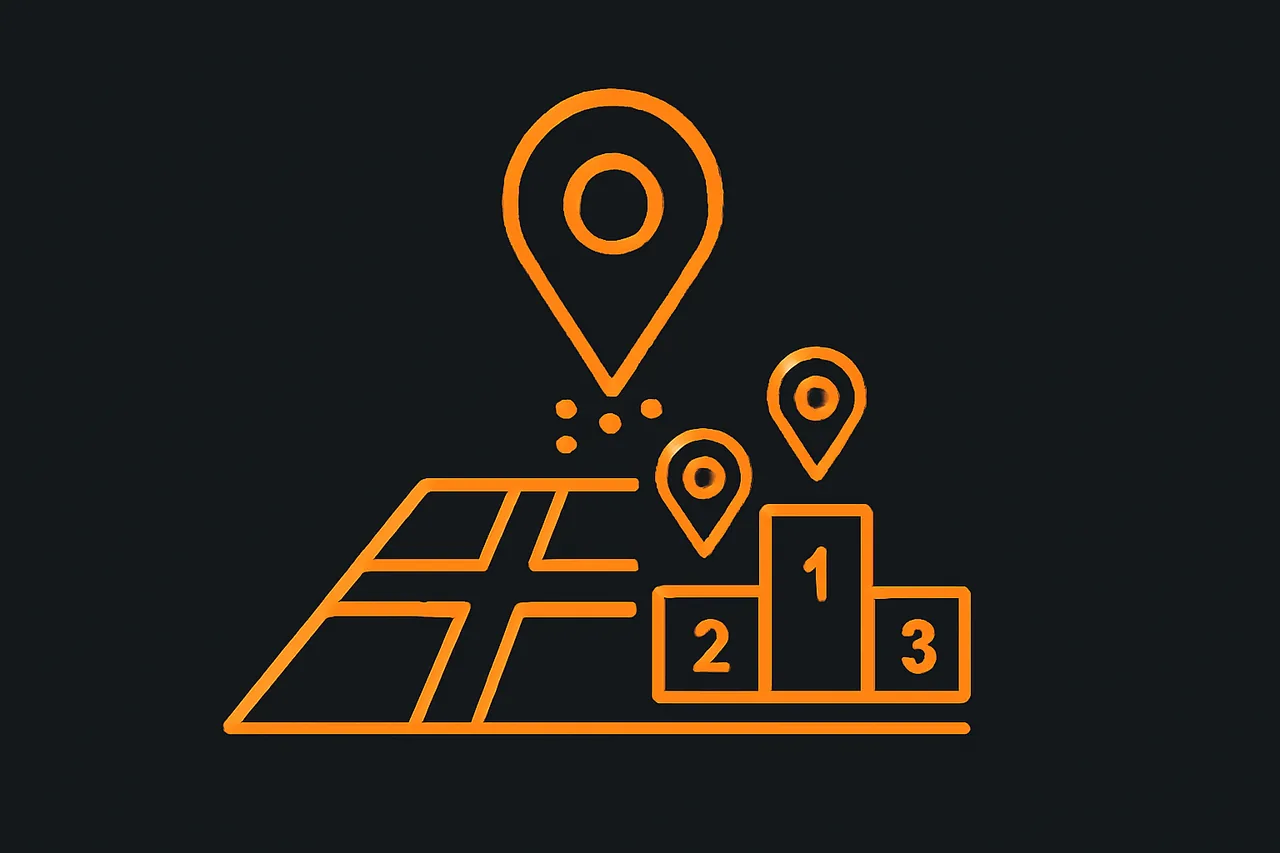
How do you rank in the Google Map Pack? Optimize and actively manage your Google Business Profile, keep your name/address/phone consistent everywhere, earn steady genuine reviews, and publish locally-relevant content. Proximity, relevance and prominence are the core factors — and the Profile is the single biggest lever you control.
Own your Google Business Profile
Claim it and complete every field: correct categories, hours, services, service areas and real photos. An incomplete profile rarely ranks.
Keep your NAP consistent
Your Name, Address and Phone should match exactly across your site, Profile and every listing. Inconsistency dilutes your ranking signals.
Earn reviews — the right way
Ask every happy customer, make it one tap with a direct link, and respond to all reviews professionally. Never buy fake reviews — platforms detect and penalize them.
Build local relevance
Genuinely useful location and service pages — with real local detail, not city-swapped templates — help Google connect you to local searches.
Be patient and consistent
Map Pack movement usually takes weeks to months. Anyone promising overnight #1 is overselling. See our local SEO approach.
Frequently asked questions
How do you rank in the Google Map Pack?
Optimize and actively manage your Google Business Profile, keep your name, address and phone consistent everywhere, earn steady genuine reviews, and publish locally-relevant content. Proximity, relevance and prominence are the core factors.
What is the Google Map Pack?
The Map Pack is the block of three local businesses shown with a map at the top of local search results. Those three spots capture the majority of local clicks and calls.
How important are reviews for local ranking?
Reviews influence both your local rankings and whether someone chooses to call you. Ask every happy customer, make it easy with a direct link, and respond to all reviews — never buy fake ones.
How long does local SEO take?
Map Pack movement usually takes weeks to months and compounds over time. Anyone promising overnight #1 rankings is overselling.
Keep going
Authoritative reference: Google’s Business Profile guidelines.
Put it to work: SEO & GEO, the local SEO guide, our locations, or book a call.
Test your website
See how your site is performing — enter your URL for an instant analysis of your SEO and visibility.