

Where most of your local audience still is.
Facebook gets written off by people who spend their own time elsewhere. Pew Research Center measures use at 71% of United States adults, which is more than any other platform except YouTube, and for local businesses it remains the platform where the audience actually is.



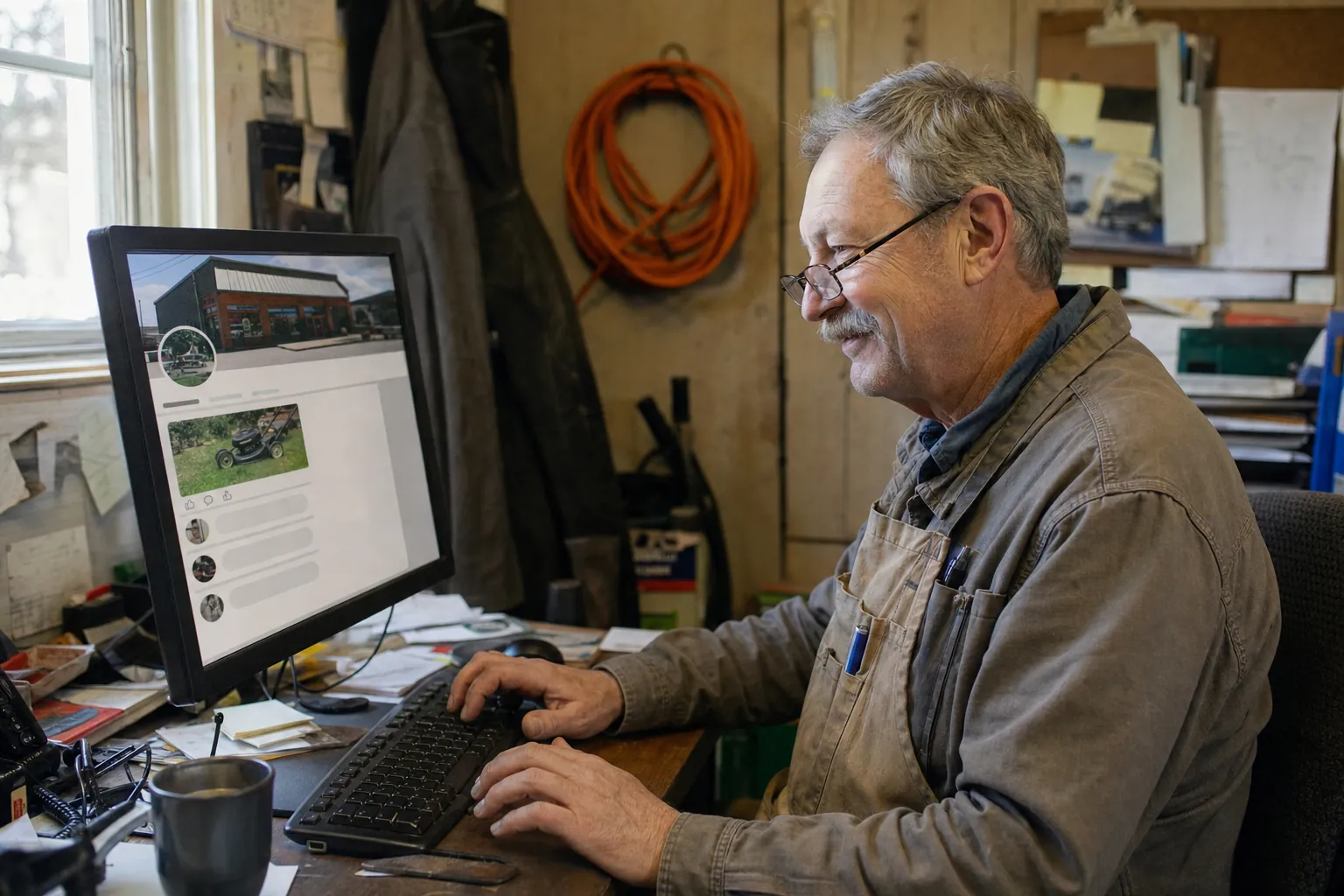
Is a Facebook page still worth maintaining?
For a local business, yes. Pew Research Center measures Facebook use at 71% of United States adults, and the platform carries two things that matter specifically to local businesses: recommendations, where people ask their own network for a plumber or a dentist, and local groups, where a large share of neighbourhood word of mouth now happens.
Organic reach on a business page is limited, which is a real constraint. The page's main job is verification: somebody hears your name, finds the page, and sees an active business with recent posts and genuine recommendations.
It is not worth maintaining if you will abandon it. A page whose last post is eighteen months old reads worse than no page at all.
Written and maintained by the VIS Mountain team. Last reviewed . The sources behind it are listed below.
What a page is actually for
A Facebook page for a local business does three things, in descending order of reliability: it verifies that you exist and are active, it carries recommendations from real people, and it occasionally reaches somebody new.
Verification is the job that always works. Somebody gets your name from a neighbour, searches it, and finds a page with recent activity, real photographs and positive recommendations. That is a meaningful part of the decision and it costs very little to maintain.
Recommendations are the underrated part. Facebook's recommendation feature is structurally different from a star rating: people ask their network for a suggestion, and their friends name businesses. Being named in those threads is genuine local word of mouth, and it is visible.
Organic reach to your own followers is the part that has genuinely declined and is unlikely to return. A page post reaches a modest fraction of the people who follow you, which is why nobody should build a strategy on it.
The audience is still there
Pew Research Center measures platform use among United States adults using address-based sampling rather than an online panel.
SourceSocial Media Fact Sheet, Pew Research Center, 2025 survey, published November 2025
The gap between perception and measurement is the useful part. Facebook is frequently dismissed by marketing people while remaining the platform their customers actually use.
What maintaining a page actually involves
This is a small amount of work done regularly, not a campaign.
Complete the page properly
Category, address, hours including holiday hours, services, a description written for a person, and an action button pointing at the thing you want. Incomplete pages are extremely common and cost nothing to fix.
Turn on recommendations and respond to them
Recommendations are Facebook's review equivalent and they carry weight with local audiences. Each one deserves an individual response, written for the next person reading it rather than for the reviewer.
- Respond to every recommendation, positive and negative
- Never confirm somebody was a patient or client in a healthcare context
- Never offer anything in exchange for a recommendation
Post two to four times a week
Drawn from the same capture habit that feeds everything else. Finished work, the team, questions people ask, what is new. Not a noticeboard of holiday hours.
See the remaining steps: What maintaining a page actually involvesHide the remaining steps: What maintaining a page actually involves
Participate in local groups, carefully
A large share of neighbourhood word of mouth has moved into local Facebook groups, and people ask for recommendations in them constantly. The rule is participate as a person and follow the group's rules, because self promotion in a community group is both against most group policies and counterproductive.
Handle messages like enquiries
Facebook messages are enquiries and should route to wherever your other enquiries go. The response time indicator is visible to visitors, which makes slow replies publicly legible.
Keep the information current
Hours, services and contact details, checked when anything changes. Facebook is one of the places a wrong record about your business circulates, which matters for consistency as well as for the person who turns up on a day you are closed.
An hour a week covers most of this for most businesses, which is roughly the right amount of investment for what it reliably does.
A social profile that is also a listing
Facebook is the first tile on the left of this drawing, and it could just as fairly sit on the right.
Local groups, and how not to get thrown out of them
Neighbourhood and town Facebook groups are where a meaningful share of local recommendation now happens. Somebody asks who to call for a leaking roof, and twenty neighbours answer. Being named in those threads is the most valuable social outcome available to a local business.
The way to be named is to be worth naming, and the way to accelerate it is to be genuinely present rather than promotional. Most local groups have explicit rules against business self promotion, and breaking them gets you removed and remembered.
Read the full breakdown: Local groups, and how not to get thrown out of themHide the full breakdown: Local groups, and how not to get thrown out of them
What works: answering questions in your area of expertise as a person, with no pitch attached. Being visibly local. Occasionally, where the group permits it, responding when somebody asks for exactly what you do.
What does not work: posting your offer, having staff post recommendations for their own employer without disclosing the connection, or creating accounts to recommend yourself. Beyond being obvious, an employee recommending their employer without disclosing the relationship is exactly what the Federal Trade Commission's endorsement guides address.
This is also the one part of Facebook work that cannot be outsourced convincingly. A group notices an agency voice immediately, which means the person doing it has to be somebody from your business rather than somebody from ours. What we can do is tell you which groups are worth being in, what the rules are, and what being genuinely useful in one looks like.
One further caution. Several categories of business are effectively barred from participating in the obvious way. In healthcare, answering a question about somebody's symptoms in a public group is a problem regardless of how carefully it is phrased, and confirming that a person commenting is a patient is a straightforward confidentiality breach. In legal, the same care applies to anything that could be read as advice or as creating a relationship. In those categories the useful contribution is general information with no reference to any individual, and the discipline is knowing when not to reply at all.
What is wrong with most local business pages
Look at your own page as somebody who just heard your name would.
- The last post is months old, which reads as a business that may have closed.
- Hours are wrong or holiday hours were never set.
- Recommendations are off, or are on and unanswered.
- Messages unread, with a visible slow response indicator telling everybody so.
- The action button points at the home page rather than at booking or contact.
See the full checklist: What is wrong with most local business pagesHide the full checklist: What is wrong with most local business pages
- Every post is a notice rather than something somebody would want to see.
- Address or phone number differs from your Google Business Profile, which undermines consistency.
- A duplicate unofficial page created by Facebook or by a former employee, splitting your recommendations.
- Staff recommending the business without disclosing that they work there.
The duplicate page problem is common and worth checking. Search your business name on Facebook and see how many results describe you.
How to measure it
Page and profile visits, which indicate people checking you out, and which is the metric closest to the job the page actually does.
Action button clicks and link clicks through to the site or the booking page.
Read the full breakdown: How to measure itHide the full breakdown: How to measure it
Messages that became conversations, tracked wherever your enquiries land rather than in the platform.
Recommendation count and recency, which behave like reviews: recent ones carry far more weight than an accumulated total.
What to ignore: follower count, post reach and engagement rate as headline numbers. All three measure platform behaviour rather than business outcomes, and all three move for reasons unrelated to anything you did.
Attribution on this platform is weak and we would rather say so. A great deal of what Facebook contributes shows up later as a direct visit, a phone call or a branded search, with no traceable link back to the post or the group thread that caused it. Asking new enquiries how they heard about you is unfashionable and remains one of the more reliable signals available here.
We do not publish a price for this piece of work on its own, because the right scope depends on what already exists. What is published is the bundle pricing: 2,400, 3,600 or 4,800 dollars a month depending on which channels are running. You can read the full breakdown on the pricing page, and you will get an exact number in writing before anything starts.
How this connects to the rest
Facebook is one platform inside social media management, and whether it is right for you is answered at the hub rather than assumed here.
It draws on social content production for material, since a page without a capture habit becomes a noticeboard within two months.
Recommendations overlap with review management, and the same rules apply: ask everybody, never incentivise, respond to all of them.
Paid reach on the platform is a separate discipline under Meta ads management. The page proves you are real. Advertising buys reach. A business that boosts posts and calls it a strategy is doing neither well.
Search your own business name on Facebook.
See how many pages come back, whether the hours are right, and when the last post was. That three minute check usually finds the work.
Straight answers.
Is Facebook dead for business?
Not for local businesses. Pew Research Center measures use at 71% of United States adults, which is higher than any platform except YouTube.
What has declined is organic reach to your own followers. That is a real constraint and it is different from the audience not being there.
How do we get more recommendations?
Ask everybody, promptly, without offering anything in exchange. Incentivised recommendations breach platform policy and the Federal Trade Commission's rules on reviews, and the risk lands on you.
Responding to every recommendation individually also helps, because it is visible to the next person deciding whether to leave one.
Should we post in local groups?
Participate, do not promote. Most groups have explicit rules against business self promotion and removal is both likely and memorable.
Answering questions in your area of expertise as a person, with no pitch attached, is what produces being named when somebody asks for a recommendation.
There are two pages for our business. What do we do?
Duplicate pages are common, often created automatically or by a former employee, and they split your recommendations and confuse people.
Facebook provides a merge process for duplicates of the same business. Merging preserves the content and following, where deleting does not.
How often should we post?
Two to four times a week, drawn from the same material that feeds everything else.
The failure mode is not posting too little, it is posting only notices. A page of holiday hours and closures does not do the verification job it exists for.
Where this comes from.
Primary documentation and published research behind the guidance on this page.
- The FTC's Endorsement Guides: What People Are Asking (opens in a new tab)
- Truth in advertising, Federal Trade Commission (opens in a new tab)
- Pew Research Center, internet and technology (opens in a new tab)
- FTC rule banning fake reviews and testimonials (opens in a new tab)
- Advertising FAQs: a guide for small business, FTC (opens in a new tab)What substantiation a claim needs, whichever platform it runs on.
Talk to the team
A short call, a look at how the business currently shows up, and a straight answer on what we would do first.