

Local SEO
Getting into the map pack, and staying there.
Local SEO is the work of appearing in the three business listings Google shows on a map when someone searches for a service near them. It runs on different signals from ordinary SEO, and one of the biggest signals is something nobody can buy.








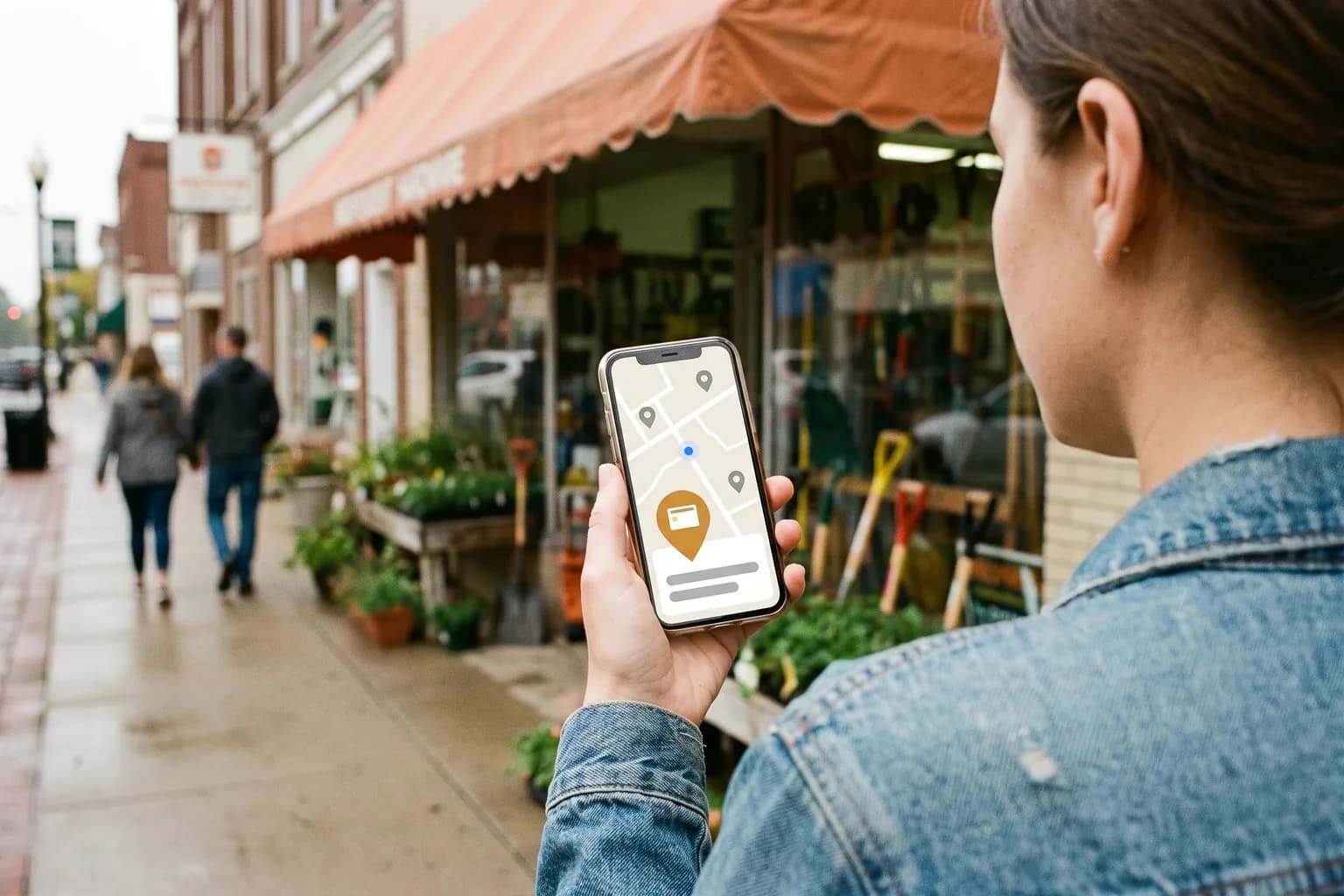
How does local SEO get a business into the map pack?
Google states that local results are ranked on three things: relevance, meaning how well your profile matches what was searched; distance, meaning how far you are from the searcher or the place they named; and prominence, meaning how well known the business is, which includes review signals and your presence across the rest of the web.
You cannot change distance, which is the honest limit of this work. What you can change is relevance, by having the right primary category, accurate services and a complete profile, and prominence, by earning reviews consistently, keeping your record consistent across the web, and building a site Google associates with the area you serve.
Work on a Google Business Profile often moves within weeks, which makes it the fastest part of most search programs. Holding a position in a dense market takes ongoing work rather than a one time fix.
Written and maintained by the VIS Mountain team. Last reviewed . The sources behind it are listed below.
Local SEO and regular SEO are not the same job
Ordinary SEO tries to make a web page rank in a list of links. Local SEO tries to make a business listing rank on a map. They share some foundations and differ in almost everything else that matters.
The asset is different. In organic search the asset is your page, which you control completely. In local search the asset is your Google Business Profile, which Google owns, other people can suggest edits to, and Google can suspend.
The signals are different. A page ranks on relevance, content quality and links. A listing ranks on category, proximity, review signals and how consistently the business appears across the rest of the web.
The outcome is different. Someone in the map pack often never reaches your website at all. They tap the call button, tap directions, or read the reviews and decide. That changes what you should optimise: the profile is the landing page.
Most local businesses need both, because the same search usually shows a map pack and a list of organic results, and different people click different parts of the page.
Relevance, distance, prominence
This is the only framing Google itself publishes, which makes it both the most accurate available and the one worth learning.
Relevance is how well your profile matches the search. This is category, services, the description, and whether the profile actually describes what someone asked for. It is the fastest thing to fix and the most commonly wrong.
Distance is how far you are from the searcher, or from the place named in the search. It is not adjustable, and any vendor implying otherwise is describing something that does not exist.
Prominence is how well known the business is. Reviews, mentions, links, directory presence and general visibility across the web all feed it. It is the slowest of the three and the one that separates businesses in a crowded market.
What practitioners rank as the top signals
Whitespark surveys local search practitioners annually and scores factors by perceived influence. It is a practitioner opinion study rather than an experiment, so treat it as informed consensus rather than proof.
SourceLocal Search Ranking Factors, Whitespark, 2026, 47 practitioners scoring 187 factors
Two of the top three are things you either cannot change or should not manipulate. Primary category is the one genuine, safe, high leverage lever on the list, and it is free to fix today.
How the work actually runs
This is roughly the order we do it in, because the early items are fast and free and the later items compound slowly.
Fix the primary category first
It is the single highest leverage change available, it takes minutes, and a surprising number of businesses have it wrong. A dental practice categorised as Dentist rather than Cosmetic Dentist, or the reverse, is competing in a different set entirely. Secondary categories widen coverage but do not replace getting the primary one right.
Complete the profile properly
Services with descriptions, attributes, opening hours including holiday hours, a description that reads like a human wrote it, products where relevant, and photographs of the actual premises, team and work. Incomplete profiles lose to complete ones in similar positions.
- Every service listed individually rather than as one generic entry
- Hours kept current, because a business shown as closed loses the search entirely
- Real photographs, because stock imagery of somewhere else is worse than none
Make the record consistent everywhere
Your name, address and phone number are quoted by dozens of platforms and aggregators. Where they disagree, prominence suffers and real customers occasionally call the wrong number. This is a data cleanup job, and it has to be repeated because listings drift.
See the remaining steps: How the work actually runsHide the remaining steps: How the work actually runs
Build review flow, not review volume
A steady trickle of recent reviews, asked for from everyone rather than selectively, answered individually. Consumers weight recency heavily, and a stalled profile reads as a stalled business.
Give the website something local to say
Pages that genuinely describe the areas you serve, with real detail about the place rather than a city name swapped into a template. Location pages that say nothing specific are both useless to a reader and recognisable as spam.
Earn local prominence off the profile
Local press, sponsorships, chambers, industry associations, supplier listings, and genuine community involvement. This is the slow part and it is what actually separates the top three from the next five in a competitive area.
The first two steps frequently produce visible movement within a few weeks. The last one is measured in quarters.
From a nearby search to a ringing phone
Local SEO is easier to judge once you can see the five steps it is trying to move somebody through.
How to measure this honestly
Local rankings are personal. Two people standing a mile apart get different results for the same search, so a single rank number is close to meaningless. A geo grid report, which checks the same search from many points across your service area, is the honest picture: it shows the shape of your visibility rather than one number.
Google's own Business Profile performance data is the other half. Calls from the profile, direction requests, website clicks, messages, and the searches people used to find you. It is free, it is from the platform itself, and it connects to reality better than any rank tracker.
Watch the trend rather than the week. Local visibility moves around for reasons nobody controls, including Google testing changes, and a single bad week means nothing.
The number that settles the argument is still calls and booked work. Everything above is a proxy for it.
Signs local SEO is being done badly
Several of these are actively risky rather than merely wasteful, because they can cost you the profile entirely.
- Keywords stuffed into the business name. It correlates with rankings and it violates Google's guidelines for representing your business, which risks suspension. We will not do it and we will tell you when a competitor is.
- A listing created at an address the business does not staff. Virtual offices and mailbox addresses are explicitly not eligible for a Business Profile.
- Dozens of location pages that differ only by the city name, which split your site's authority and read as spam to a person and a machine.
- Review requests sent only to customers expected to be happy, which is gating and is prohibited.
- A tracking number replacing your real number on the profile, which quietly breaks the consistency work the rest of the program depends on.
See the full checklist: Signs local SEO is being done badlyHide the full checklist: Signs local SEO is being done badly
- Reporting built on one rank number from one location, which tells you nothing about how your actual service area sees you.
- Nobody monitoring suggested edits. Anyone can suggest a change to your profile, including a competitor, and changes can go live without you noticing.
- No plan for what happens if the profile is suspended, which is a real risk in some categories and a genuine emergency when it happens.
The business name point is the most commonly ducked question in this field. The honest answer is that it works and that it can cost you the listing, which is a trade we will not make with your business.
What varies by market
Density decides how hard this is. In a dense suburb where twelve practices sit within three miles, proximity dominates and the winnable ground is category accuracy, review flow and prominence. In a rural area with three competitors, a complete profile and a handful of reviews often puts you in the pack.
Service area businesses without a storefront play a different game. You hide the address, define a service area, and accept that you will rank strongest near your registered location and fade with distance. There is no configuration that removes that.
Multi location businesses have a structural problem rather than a ranking problem: locations competing with each other for the same searches. That is a different piece of work.
Categories with a licence requirement often have a faster route through Local Services Ads, which sit above the map pack and are charged per lead. For some trades that is a better first move than fighting for organic local position.
What we need from you
Ownership of the Google Business Profile, or the ability to claim it. Profiles claimed years ago by a former marketing company or a departed employee are common and recovering them is often the first task.
Accurate facts: real hours, the services you actually offer, the areas you genuinely serve, and any licence or credential worth stating. We will not invent a catchment area or a response time on your behalf.
Read the full breakdown: What we need from youHide the full breakdown: What we need from you
Photographs of the real place, the real team and real work. This is the single easiest thing you can give us and the one most often not supplied.
A team habit of asking for reviews. The system produces reviews in proportion to how consistently your people trigger it.
We do not publish a price for this piece of work on its own, because the right scope depends on what already exists. What is published is the bundle pricing: 2,400, 3,600 or 4,800 dollars a month depending on which channels are running. You can read the full breakdown on the pricing page, and you will get an exact number in writing before anything starts.
How this connects to the rest
Local SEO is one of ten pieces inside our SEO and GEO program, and in practice it is usually the first one to move. It leans directly on Google Business Profile management, which is the asset it optimises, and on local listings work, which supplies the consistency prominence depends on.
Review management is not a separate concern here. Review signals feed prominence, so a business with no review process has a ceiling on local visibility no amount of profile editing removes.
Where a business has more than one location, multi-location SEO is the piece that stops those locations competing with each other.
If you need enquiries before local work compounds, paid advertising is the honest bridge, and for licensed trades Local Services Ads sit directly above the map pack.
See how your service area actually sees you.
We will look at your profile, your category, your listings consistency and your review flow before the call, so we can tell you which of the three ranking inputs you are actually losing on.
Straight answers.
Why is my business not showing on Google Maps?
The common causes, in order: the profile is unverified or suspended; the primary category does not match what people are searching; the address is outside the area you are searching from, because results are personalised by location; or a duplicate listing is splitting your signals.
Checking from your own office is misleading, because proximity flatters you. Check from the edges of your service area instead.
Can I rank in a city where I do not have an office?
In the map pack, it is difficult and often not possible, because distance is a published ranking input and you cannot change it. Businesses without a location in a city generally do not appear in that city's local pack.
In organic results you absolutely can, with a genuinely useful page about the work you do there. That is a real strategy and it is different from the map pack.
How long does local SEO take?
Profile and category fixes can show movement within a few weeks. Listings consistency and review flow take a couple of months to register. Prominence in a competitive area is measured in quarters.
Nobody can promise a position, including us. What we can tell you in advance is what we will change and roughly when each change usually shows.
Do citations still matter?
Less than they did a decade ago as a ranking lever, and still meaningfully as a consistency signal and as a source of real referral traffic in some categories.
The productive version is fixing the records that are wrong and keeping the important platforms correct, rather than buying hundreds of low quality listings.
Should I put keywords in my business name?
No. It is effective and it is against Google's guidelines for representing your business, which means a suspension risk that puts your entire local visibility at stake.
If a competitor is doing it, it can be reported. We will show you how rather than copy them.
Can I do this myself?
Much of it, yes, and we would rather tell you that than not. Fixing your primary category, completing your profile, keeping hours accurate and asking customers for reviews are all free and within reach of any owner willing to spend a few hours.
What usually needs help is listings cleanup at scale, local content, prominence building and knowing what to do when something breaks.
Where this comes from.
Primary documentation and published research behind the guidance on this page.
- How Google improves local ranking results (opens in a new tab)
- Guidelines for representing your business on Google (opens in a new tab)
- LocalBusiness structured data, Google Search Central (opens in a new tab)
- Local Search Ranking Factors 2026, Whitespark (opens in a new tab)187 factors scored by 47 local search practitioners.
- Google Search Console Help (opens in a new tab)
Talk to the team
A short call, a look at how the business currently shows up, and a straight answer on what we would do first.