

Lead systems
What happens to an enquiry after it arrives.
Most businesses shopping for lead generation are buying a source, and their real problem is that the enquiries they already get are handled badly. A system is the part that makes any source pay, and it is the part almost nobody builds.
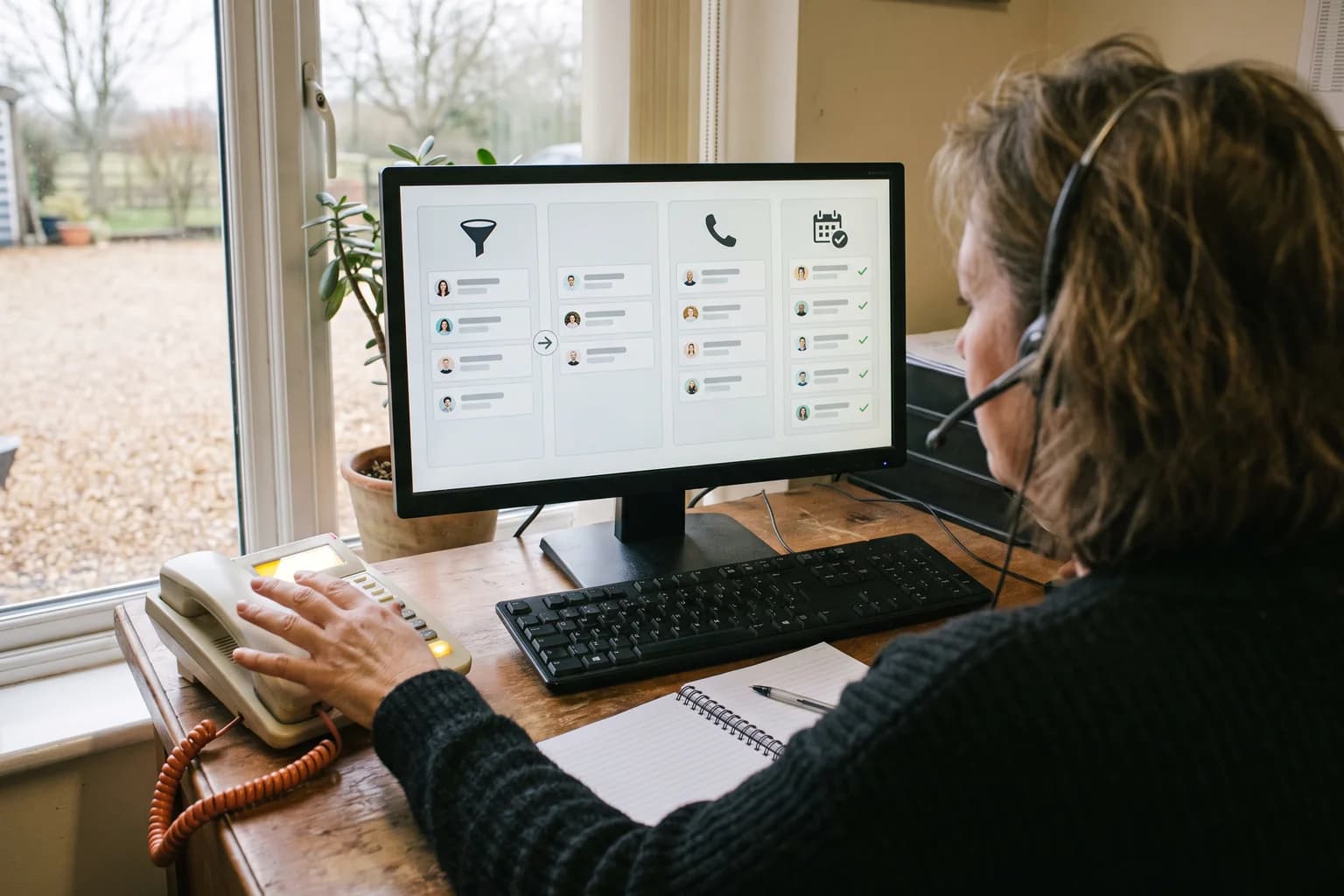
What is a lead generation system, as opposed to a lead source?
A lead source is anything that produces an enquiry: a search ranking, an advertisement, a listing, a referral, a marketplace. A lead generation system is everything that happens to the enquiry afterwards: every way in is captured, it lands in one inbox with its source attached, somebody replies, follow up runs with the person's consent, the enquiry is qualified, a slot is booked, and the outcome is reported back to the source that produced it.
The difference matters because a source can be rented and a system cannot. Rent a source and you get enquiries for as long as you pay. Build a system and every source you ever add, paid or free, is handled the same way and measured against the same outcome.
The system is what most local businesses are missing. They rarely lack enquiries. They lack a reliable answer to what happened to each one.
Written and maintained by the VIS Mountain team. Last reviewed . The sources behind it are listed below.
A source sends. A system receives.
Ask a business how many enquiries it got last month and most can guess. Ask what happened to each one and the room goes quiet. That gap is the system, and it is where the money goes.
An enquiry is not a customer. Between the two sit a reply, a conversation, a decision and a booking, and each of those is a place to lose the person. Marketing pays to produce the enquiry. The system decides how many survive.
Read the full breakdown: A source sends. A system receives.Hide the full breakdown: A source sends. A system receives.
This is also why buying more leads so often disappoints. Doubling the enquiries into a business that answers half of them produces twice as many unanswered enquiries. The cheapest improvement available is usually not a new source but a working system behind the sources already running.
The system is not software, though it usually involves some. It is a set of agreed answers: who sees a new enquiry, who owns the reply, what is sent if nobody replies, what counts as qualified, where the booking goes, and who reads the report.
It is not for a business that gets three enquiries a month and knows each one by name. Below a certain volume, an owner with a notebook and a habit of calling back is the system, and it works.
The seven parts, in the order they are built
Each part depends on the one before it. A follow up sequence with no inbox to trigger from, or reporting with no source tag to report on, is how these projects stall.
Capture every way in
Phone calls, website forms, website chat, ad lead forms, messages on your listing, and the booking calendar. Each is connected so the enquiry is recorded automatically. Anything relying on somebody remembering to write it down will be incomplete within a fortnight.
One inbox, with the source attached
Everything lands in one list, and each row carries where it came from: which channel, which campaign, which page. Calls get this through call tracking, forms through hidden fields, and ad lead forms through the delivery the platform provides. Google Ads, for example, holds a lead form submission for sixty days and can send it straight to a CRM by webhook.
- One list, whoever is on shift
- Source, campaign and page on every row
- No enquiry visible to only one person
A reply that actually happens
An instant acknowledgement buys time. It does not replace the human reply, and the system exists to make sure that reply happens. That means a named owner for every new enquiry, a window everyone has agreed to, and an alert to somebody else when the window passes.
See the remaining steps: The seven parts, in the order they are builtHide the remaining steps: The seven parts, in the order they are built
Follow up, with consent
Most bookings in a considered purchase take more than one contact, and most businesses make one. The sequence runs by itself: a text back, an email, a reminder, and then it stops, on a reply, a booking or an opt out. It only runs to people who gave you that number or address for that purpose.
Qualification
A short, written definition of what a good enquiry is: the service, the area, the timing, and anything that rules a job out. It is applied by the person replying, or by AI chat and intake before a person is involved, and it is what stops a diary filling with appointments nobody can serve.
The booked slot
The point of the system is a slot in a calendar with a name against it. Booking should be one step from any conversation, and the confirmation and reminders should go out by themselves.
Reporting from first touch to booked job
Because every row carries its source, the report can say which source produced which bookings, not which produced the most enquiries. That is the number that should decide next month's budget, and it can be sent back to the advertising platforms so they optimise toward customers rather than form fills.
Dash Funnels, the VIS Mountain product for funnels, landing pages and CRM follow-up, can hold all seven. So can several other tools, and the one you already pay for is usually the place to start.
Where the source tag comes from
Reporting to the booked job is only possible if the source was captured at the moment the enquiry arrived. This is the mechanism.
Notice what the drawing does not have: a separate list for each channel. The moment calls live in one place and forms in another, the report becomes an argument.
Owning the system, or renting the leads
Lead marketplaces sell enquiries by the unit. They can be a useful source. They are not a system, and the differences are worth seeing side by side.
| Item | Rented, from a marketplace | Owned |
|---|---|---|
| Who else gets the enquiry | Often resold, and not only to you | Only you |
| Who the person thinks they contacted | Frequently not you | You, by name |
| What you learn about the source | Little beyond the invoice | Channel, campaign and page, every time |
| What happens if you stop paying | The enquiries stop the same day | The system keeps handling every other source |
| Consent to follow up | Whatever the seller collected, on the seller's form | Given to you, on your form, and recorded |
The Federal Trade Commission's own staff perspective on lead generation describes leads being sold to aggregators and resold, sometimes several times, so that a person who filled in one form is contacted by numerous marketers unfamiliar to them, and it notes that the sale may go to the buyer willing to pay the most rather than the one best suited. That is the product. An owned system can still take a marketplace as one source, and it should tag those enquiries so their real conversion can be compared with the rest.
Where a system is usually missing
These are the questions we ask first. Each one that cannot be answered is a leak, and the leaks are found before any new source is discussed.
- Can you list every enquiry from last month in one place, with what happened to it.
- Does a missed call produce anything at all, or does it just ring out.
- Do form submissions go to an address that somebody checks on a Saturday.
- Is there a written window for a first reply, and does anyone know when it is missed.
- Does follow up continue after one attempt, and does it stop when the person books.
See the full checklist: Where a system is usually missingHide the full checklist: Where a system is usually missing
- Does anyone know which source produced the last ten bookings, as opposed to the last ten enquiries.
- Do enquiries from your listing, your social pages and your chat reach the same list as your forms.
- Can two people tell whether the other has already replied.
- Is consent to text and to email recorded anywhere, so that it could be shown if asked.
Most businesses answer no to at least four. Fixing those four typically changes more than any change to the marketing that produced the enquiries.
Consent, email law and healthcare
Follow up touches three sets of rules, and the system is built to all three rather than fixed after a complaint.
Texts and calls first. The Federal Communications Commission's consumer guide states that its rules ban text messages sent to a mobile phone using an autodialer unless the phone owner previously gave consent, that commercial texts require written consent, that the rules apply whether or not the number is on the Do Not Call Registry, and that a person may opt out at any time in any reasonable manner. In practice: message only people who gave you the number for that purpose, keep the record of when and where they did, identify yourself, and honour a stop immediately.
Read the full breakdown: Consent, email law and healthcareHide the full breakdown: Consent, email law and healthcare
Email next. Commercial email sits under the CAN-SPAM Act, which requires accurate headers, a physical postal address, an opt out that is honoured within ten business days, and which does not let you contract the responsibility away to a vendor. Confirmations and reminders about a booking the person already made are treated differently from promotion, so the system keeps the two kinds of message separate.
Healthcare adds a layer that is not ours to interpret. A confirmation, a reminder or a follow up text must not reveal that somebody is a patient or what they enquired about, and the HIPAA Privacy Rule restricts the use of patient information for marketing without written authorisation. The practice is responsible for its own compliance. We build to the stricter reading by default, keep consent records, and flag anything that looks as if it needs your own counsel's view.
There is one more rule, and it is ours. If a marketplace or an ad platform delivers an enquiry with a consent box the seller ticked on the person's behalf, we treat it as no consent at all.
What a system reports, and what it cannot promise
Five numbers, monthly. Enquiries by source. Share answered inside the agreed window. Contact attempts per enquiry. Share qualified. Bookings by source, which is the only one of the five a budget should be set on.
Two more are worth reading. Lost reasons, aggregated, which will tell you whether you are losing on price, on availability or on speed. And the outcome of enquiries from any rented source against the rest, which is the honest way to decide whether a marketplace earns its place.
Read the full breakdown: What a system reports, and what it cannot promiseHide the full breakdown: What a system reports, and what it cannot promise
What the system cannot do is produce demand. If nobody is searching for what you sell in the area you serve, a perfect system handles nothing perfectly. Nor can it make a person book: it can make the reply fast, the follow up polite and persistent, and the booking one step away, and then the decision is theirs.
We do not publish a price for this piece of work on its own, because the right scope depends on what already exists. What is published is the bundle pricing: 2,400, 3,600 or 4,800 dollars a month depending on which channels are running. You can read the full breakdown on the pricing page, and you will get an exact number in writing before anything starts.
How this connects to the rest
A lead generation system is the assembly of five things that are also sold on their own. Call tracking puts the phone into the inbox with its source. Conversion tracking setup does the same for forms and ad clicks, and sends the outcome back to the platforms.
CRM implementation is the inbox itself, and the pipeline the enquiry moves through.
Marketing automation is the follow up, and the alert when nobody has replied.
AI chat and intake is one more way in, and the place qualification can start before a person is involved.
Every acquisition channel on this site, from local SEO to Google Ads, delivers into it. This is the page about what happens when they do.
Trace your last ten enquiries to their outcome.
Where each came from, who replied, how long it took, and whether it booked. If that takes longer than ten minutes, the system is what is missing, and it is where we would start.
Straight answers.
Is this the same as buying leads?
No. Buying leads is renting a source. A system is what handles enquiries from every source, including a rented one, and it stays yours when the renting stops.
The FTC's own account of the lead industry describes enquiries being sold to aggregators and resold, sometimes several times. A bought lead can still be worth having. It should be tagged as such and judged on the bookings it produces.
We get plenty of enquiries. Do we still need this?
That is exactly when it pays. The more enquiries arrive, the more are lost in the gap between arriving and being answered, and the harder it is to see which source the good ones came from.
The test is simple: list last month's enquiries in one place with what happened to each. If you cannot, the enquiries are not the problem.
How quickly should we reply?
Faster than you do now, and we will not put a number on it that a study does not support. The reasoning is enough: a person who has just enquired is still comparing, and the first real conversation they have is usually with the business that gets to them first.
The system's job is to make a fast reply the default rather than a heroic effort, with an acknowledgement in seconds and a named person after it.
Can we text people who enquired?
If they gave you the number for that purpose, and you keep the record. The FCC's guide says commercial texts require written consent, and that a person can opt out at any time in any reasonable manner.
A reply to somebody's own message is a different thing from a promotional text to a list, and the system treats them differently. Anything unusual goes to your own counsel.
Do we have to replace our current software?
Usually not. Most practice management and job management systems can be connected rather than replaced, and the tool your team already uses is normally the right inbox.
Where a replacement genuinely is right, we will make the case rather than assume it.
How long before it shows in the numbers?
The first report is available as soon as enquiries are being captured and tagged, which is early. What it shows at first is the leak: how many enquiries were waiting, how many got one attempt, how many had no source.
Bookings by source becomes reliable once a full sales cycle has passed for your category, which is days for an urgent trade and months for an implant case or a legal matter.
Where this comes from.
Primary documentation and published research behind the guidance on this page.
- FCC rules on unwanted calls and texts (opens in a new tab)
- CAN-SPAM Act compliance guide, FTC (opens in a new tab)
- HIPAA and marketing, U.S. Department of Health and Human Services (opens in a new tab)
- Follow the Lead workshop, staff perspective, FTC Bureau of Consumer Protection, 2016 (opens in a new tab)How bought leads are collected, resold and auctioned, in the regulator's own words.
- About lead form assets, Google Ads Help (opens in a new tab)Leads submitted inside an ad are held for 60 days and can be sent to a CRM by webhook.
- Different ways to track conversions, Google Ads Help (opens in a new tab)
Talk to the team
A short call, a look at how the business currently shows up, and a straight answer on what we would do first.