

The profile people check before they call.
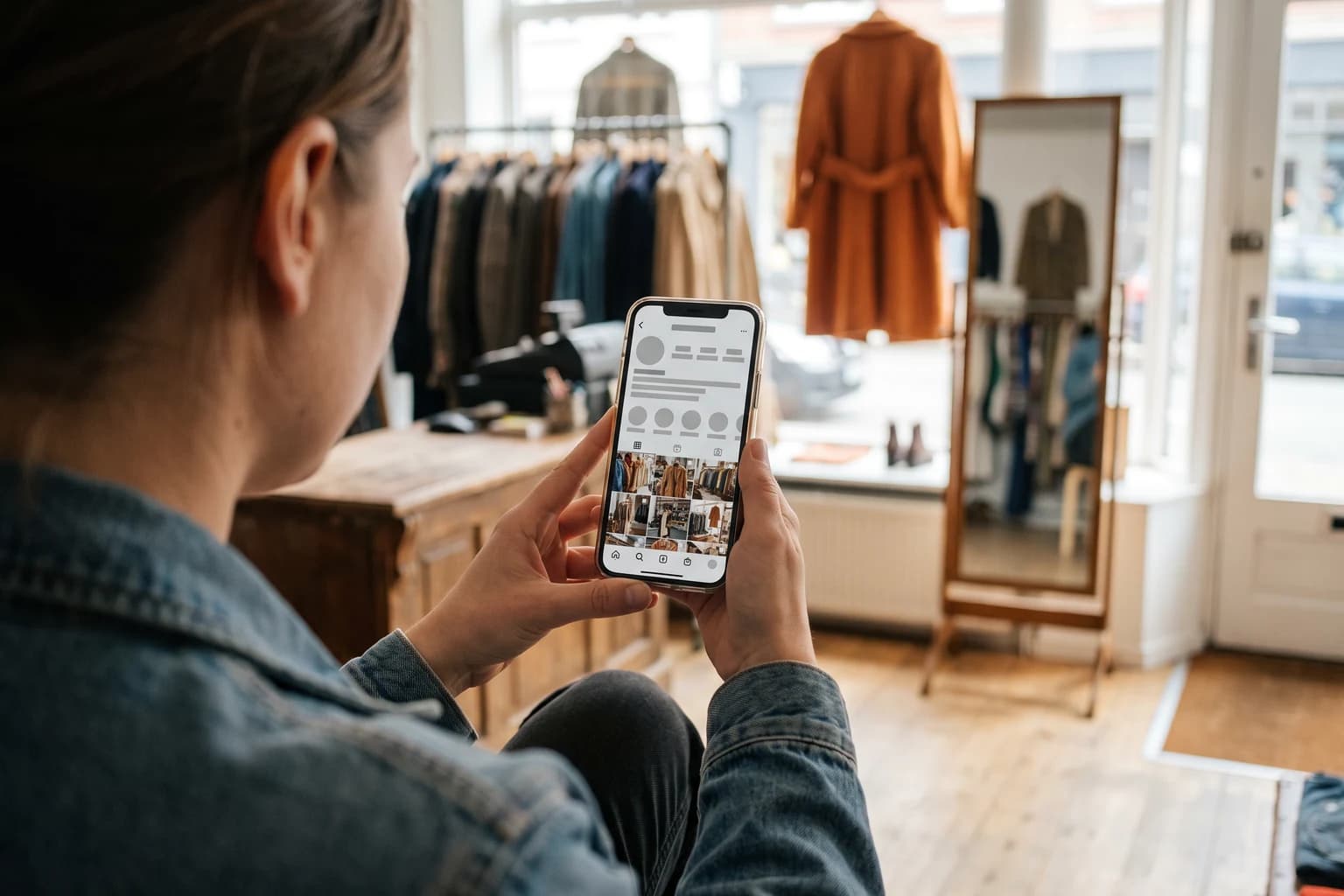
For most local businesses Instagram is not a discovery engine. It is the place somebody goes to decide whether you are any good, after hearing your name somewhere else. That is a smaller job than the pitch usually suggests and a far more achievable one.



What does Instagram actually do for a local business?
It works as a portfolio and a credibility check. Somebody gets your name, looks you up, and decides from the grid whether your work is good and whether the business is active. Pew Research Center measures Instagram use at 50% of United States adults, so the audience is there, and for visual services the profile frequently does more persuading than the website.
It is weaker as a pure discovery channel for a local service business. Organic reach for a small account is limited and unreliable, and expecting new customers to find you by scrolling is the most common way businesses conclude it does not work.
The measurable outcomes worth tracking are profile visits, website and booking link clicks, and direct messages that became conversations. Follower count is not one of them.
Written and maintained by the VIS Mountain team. Last reviewed . The sources behind it are listed below.
The grid is the first impression
When somebody opens your profile they see your bio, your link, your highlights and roughly nine posts. That is the whole judgement. Almost nobody scrolls further, and nobody reads the caption on post fourteen.
This changes what matters. The top nine posts are a portfolio, so they should be your best work rather than whatever happened to be published most recently. A profile whose recent posts are three quote graphics and a holiday notice is failing the only job it reliably does.
The bio has seconds to establish what you do, where, and what to do next. Business category, location and a working link to the thing you want people to do.
Highlights are the second most underused feature. Saved stories grouped by subject, meaning services, before and after work, the team, frequently asked questions and the premises, give somebody a structured way to check you out without scrolling.
Who is actually on it
Pew Research Center measures platform use among United States adults with address-based sampling rather than a self-selecting panel.
SourceSocial Media Fact Sheet, Pew Research Center, 2025 survey, published November 2025
Half of all adults is a large audience. It is also half, which is why for most local businesses Instagram is one profile kept current rather than the centre of the strategy.
Getting the profile right first
Most of the available improvement on a local business Instagram profile is in the setup rather than in the posting.
Use a professional account
A business or creator account rather than a personal one. It is free, it gives you insights showing what people actually did, and it enables contact buttons and action buttons that a personal account cannot have.
Write a bio that answers three questions
What you do, where you do it, and what to do next. The category field and the location field both matter and are frequently left empty. Keywords in the name field are legitimate here in a way they are not on a Google Business Profile.
- Service and city stated plainly, not implied
- One link, pointing at the action you actually want
- Contact buttons enabled, including directions if you have premises
Fix the top nine
Whatever is currently there, replace it with your best work. Pinning posts lets you do this without deleting anything, and it is the highest return ten minutes available on the platform.
See the remaining steps: Getting the profile right firstHide the remaining steps: Getting the profile right first
Build the highlights
Services, before and after, the team, common questions, and the premises. Each one a short set of saved stories with a clear cover. This is the structured tour that the grid alone cannot give somebody.
Turn on and monitor messages
Direct messages are where Instagram turns into enquiries, and unanswered ones are the most expensive failure on the platform. Route them somewhere a person checks daily.
Then post consistently
Two to four times a week, drawn from the same capture habit that feeds everything else. Reels for reach, static posts and carousels for depth, stories for the day to day.
Steps one to four take an afternoon and are worth more than three months of posting into a badly set up profile.
What is wrong with most local business profiles
Open your own profile as a stranger would, on a phone, and work through this.
- The bio does not say what you do or where, or the location field is empty.
- The link goes to the home page rather than to the thing you actually want somebody to do.
- The top nine posts are notices, quote graphics and holiday hours rather than your best work.
- No highlights, or highlights from two years ago with no covers.
- A personal account rather than a professional one, so there are no insights and no contact buttons.
See the full checklist: What is wrong with most local business profilesHide the full checklist: What is wrong with most local business profiles
- Direct messages unread, which for many businesses is where the enquiries went.
- Stock imagery, which fails the one job the profile reliably does.
- The last post is more than a month old, which reads as a business that may have closed.
- Before and after imagery in a medical or aesthetic category posted without authorisation or without the care that category requires.
The messages item is the one that costs real money, and it is usually the easiest to fix.
The rules in visual categories
Instagram is where aesthetic and medical businesses get the most value and take the most risk, because the content that performs best is exactly the content that carries the heaviest obligations.
Patient and client imagery needs genuine, specific, documented authorisation. A verbal agreement during an appointment is not a strong basis, and consent to one use is not consent to all uses.
Read the full breakdown: The rules in visual categoriesHide the full breakdown: The rules in visual categories
Before and after imagery carries expectations about how it is presented: consistent lighting and angle, no retouching that changes the result, and honest framing about what is typical. The Federal Trade Commission's rules on substantiating claims apply to a photograph exactly as they apply to a sentence.
Endorsements and paid partnerships require the material connection to be disclosed clearly and conspicuously. Meta's built in paid partnership label is the cleanest way to do it, and a hashtag buried under three lines of caption is not.
Meta's own advertising and content policies add restrictions in health and cosmetic categories, including limits on implying knowledge of somebody's personal characteristics or condition.
We build these constraints into the brief rather than adding them after a post is reported, and where a claim is not supportable we will say so rather than posting it.
We do not publish a price for this piece of work on its own, because the right scope depends on what already exists. What is published is the bundle pricing: 2,400, 3,600 or 4,800 dollars a month depending on which channels are running. You can read the full breakdown on the pricing page, and you will get an exact number in writing before anything starts.
What each format is for
Posting the same thing in every format is how a profile becomes repetitive without becoming more effective.
| Item | Best for | Watch out for |
|---|---|---|
| Reels | Reach beyond your followers | Reach without relevance, if the audience is not local |
| Static posts | The grid, which is your portfolio | Being treated as a noticeboard |
| Carousels | Before and after, step by step explanations | Burying the point on slide four |
| Stories | Day to day activity, proving you are active | Disappearing, unless saved to highlights |
Reels are the only format that reliably reaches people who do not follow you, which makes them the discovery mechanism and everything else the credibility layer.
How to measure it honestly
Follower count is the purest vanity metric available. For a local business, four hundred local followers who might hire you are worth more than four thousand who will not, and the number can simply be bought.
Reach and impressions are barely better. They measure how many screens a post appeared on, which is a platform decision.
What is worth watching, all available free in the professional account insights: profile visits, which indicate somebody checking you out; link and action button taps; direct messages that became conversations; and saves and shares, which indicate content somebody found useful enough to keep.
Then, outside the platform, branded search volume over time and the share of new enquiries who mention having seen your work. Attribution here is genuinely imprecise and the honest position is that Instagram is judged directionally over quarters.
How this connects to the rest
Instagram is one platform inside social media management, and the hub page is where the question of whether you should be on it at all gets answered.
It depends on social content production for material, since the profile is only as good as what has been captured.
Video editing supplies the reels, which are the only format that reliably reaches people beyond your followers.
Paid promotion on Instagram is a different discipline and lives under Meta ads management. Organic posting proves you are real. Paid buys reach. Confusing the two is how businesses conclude the platform does not work.
Look at your own top nine as a stranger would.
Open your profile on a phone, and judge it the way somebody deciding whether to call you would. That usually identifies the work before we do.
Straight answers.
How many followers do we need?
Fewer than you think, and the number matters far less than who they are. For a local business, a few hundred local followers is a functioning audience.
Follower count can be bought, does not correlate with revenue and is not something we would report as a result.
Do hashtags still matter?
Less than they did, and they are not nothing. A small number of relevant and local tags is reasonable. Thirty generic tags is a habit from an older version of the platform and looks like one.
Content quality and format do far more for reach than tagging does.
How often should we post?
Two to four times a week, sustained, plus stories when there is something to show.
Daily posting is not better if the extra posts are filler. An inactive profile is worse than a quiet one, and a repetitive one trains people to scroll past.
Can we post patient before and after photos?
Only with genuine, specific, documented authorisation, and with care about how the result is presented. Consistent lighting and angle, no retouching that changes the outcome, and honest framing.
Meta's own policies add restrictions in health and cosmetic categories, and the Federal Trade Commission's substantiation rules apply to a photograph as much as to a claim in text.
Should we use a personal or business account?
A professional account, always. It is free and it gives you insights, contact buttons and action buttons that a personal account cannot have.
The only real cost is that it is visibly a business, which anyone looking you up already assumes.
Where this comes from.
Primary documentation and published research behind the guidance on this page.
- The FTC's Endorsement Guides: What People Are Asking (opens in a new tab)
- Advertising FAQs: a guide for small business, FTC (opens in a new tab)What substantiation a claim needs, whichever platform it runs on.
- Pew Research Center, internet and technology (opens in a new tab)
- Health Products Compliance Guidance, FTC (opens in a new tab)
- FTC truth in advertising (opens in a new tab)
Talk to the team
A short call, a look at how the business currently shows up, and a straight answer on what we would do first.
What a month on Instagram is made of
Follow the middle lane. It fills with a different mix from the other two, and that mix is most of what Instagram strategy is.