

Video editing
We edit the footage you shoot.
VIS Mountain does not shoot video. We edit. That is a deliberate limit and it is worth stating plainly, because it changes what this service can do for you and what has to happen inside your business for it to work.


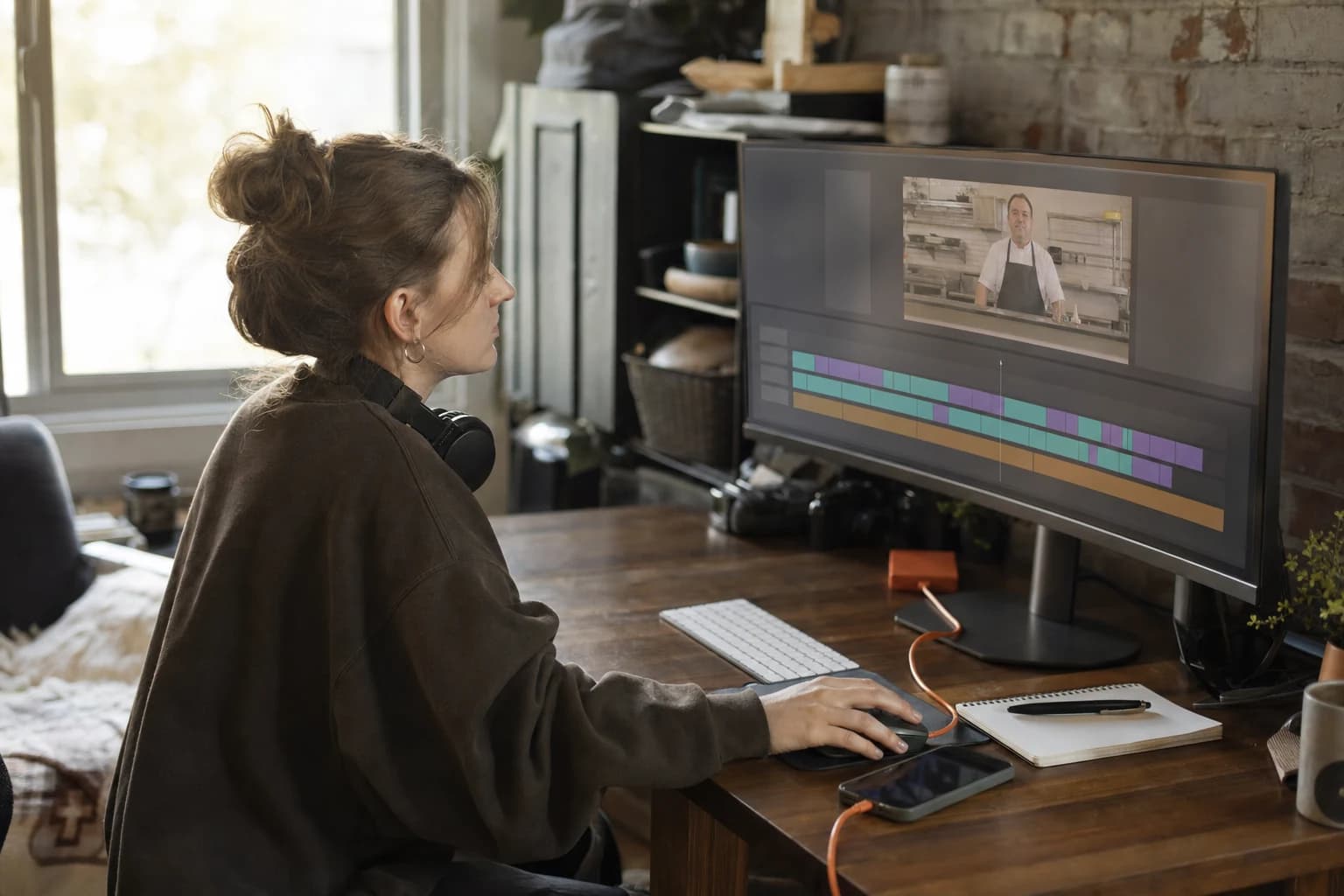
How do you turn phone footage into usable marketing video?
By capturing more than you need, in short clips, with a plan for what each one shows, and then editing it into something with a beginning, a point and an end. The editing is where structure, pacing, captions, colour correction and sound get added.
Modern phones shoot footage that is entirely good enough for social and web video. The limiting factors are almost always sound, lighting and having captured the right moments, none of which are fixed in the edit.
We do not run a production crew and will not imply otherwise. What we do is tell you exactly what to capture, then turn what you shoot into something worth posting.
Written and maintained by the VIS Mountain team. Last reviewed . The sources behind it are listed below.
Where the constraint actually is
The reason most local businesses have no usable video is not that they lack a camera. It is that nobody captured anything, and the moments worth capturing happened while everyone was working.
Editing cannot create footage that does not exist. It can rescue shaky footage, improve mediocre colour, cut around bad takes and make a two minute ramble into a forty second point. It cannot manufacture the thing you did not film.
So the useful version of this service starts with what to capture rather than with editing. A short list of what to film, a habit of filming it, and somewhere to send it. That is a two minute per day change inside your business and it is the whole difference between having video and not.
We are explicit about this because the alternative is implying we will turn up with a crew, which we will not. Being clear about the limit is more useful than being vague about the offer.
Where the video will actually be seen
Pew Research Center measures platform use among United States adults using address-based sampling rather than an online panel, which makes it the most reliable public figure available.
SourceSocial Media Fact Sheet, Pew Research Center, 2025 survey, published November 2025
Which is why the same footage gets cut more than one way. A vertical version for feeds and reels, a horizontal version for a website or YouTube, and often a shorter cut for advertising.
What to capture, and how
This is the brief we would give your team. None of it requires equipment you do not have.
Film in short clips, not long takes
Ten to twenty seconds at a time, from a few angles. Short clips are easier to shoot, easier to keep steady, and far easier to edit into something with pace. A single four minute take is the hardest possible material to work with.
Solve sound before anything else
Poor sound is the one problem editing genuinely cannot fix. Get close, get out of the wind, avoid rooms with a lot of echo, and use a cheap clip microphone for anything where somebody is speaking. Sound quality affects perceived credibility more than picture quality does.
- Close to the person speaking, not across the room
- Indoors away from air conditioning and hard echo
- A simple lapel microphone for anything longer than a few seconds
Shoot with light behind you, not behind the subject
A window behind the person speaking turns them into a silhouette. Facing the window is almost always better. This single adjustment improves more footage than any other.
See the remaining steps: What to capture, and howHide the remaining steps: What to capture, and how
Film horizontally and vertically
If a clip might be used in both a feed and on a website, capturing both orientations takes seconds and saves a crop that cuts somebody's head off.
Capture more than you think you need
Including the before, the middle and the after of a job, the details, and the wide shot that establishes where you are. Editing is choosing. Choosing needs options.
Get it to us without friction
A shared folder the team can upload to from a phone. The most common reason a capture habit dies is that sending the footage is annoying.
Two minutes a day of this produces more usable material in a month than most local businesses have gathered in a year.
What the editing actually adds
Structure first. Most raw footage has no beginning or end and buries the point in the middle. The edit decides what the clip is about, opens with something that earns attention in the first two seconds, and stops when the point is made.
Pacing. Cutting out the pauses, the throat clearing and the repetitions is most of what makes an amateur clip feel professional. A forty second cut of a two minute ramble is almost always better than the ramble.
Read the full breakdown: What the editing actually addsHide the full breakdown: What the editing actually adds
Captions. Most social video is watched with the sound off, which means uncaptioned video is silent video. Captions are burned in or provided as a file depending on the platform, and they are not optional.
Sound and colour correction. Levelling the audio so it is consistent, removing the worst of the background noise, and correcting colour so footage from different days and different phones looks like it belongs together.
Branding. Your identity applied consistently: title cards, lower thirds naming the person, and an end frame with the one action you want. Applied lightly, because a fifteen second clip with a five second logo animation has wasted a third of itself.
Formats. Vertical, horizontal and square as needed, with the composition adjusted rather than simply cropped.
What is actually worth filming
Ranked by how reliably they produce something usable, for a local business.
- Finished work, ideally with a before shot from the same angle. The most consistently effective content in any trade or aesthetic category.
- The person who does the work, answering a question customers ask constantly, in one take, in plain language.
- The process, shown briefly. What actually happens during the appointment or the job, which removes anxiety for people who have never had one.
- The premises, so somebody can recognise the building and know where to park.
- A customer saying something genuine, with their permission and with the disclosure obligations handled properly if anything was given in exchange.
See the full checklist: What is actually worth filmingHide the full checklist: What is actually worth filming
- Equipment or technique that is genuinely unusual, explained rather than just shown.
- Seasonal or timely advice, filmed once, reused each year.
- Team introductions, which do far more for trust than the writing on your about page.
Nothing on this list requires a script, a studio or a spare afternoon. All of it requires somebody to press record while the work is happening.
The rules that apply to video specifically
Everything that constrains a written claim constrains a spoken one. The Federal Trade Commission's truth in advertising rules apply to video, and a results claim made on camera needs the same substantiation as one in text.
Testimonials carry additional requirements. If anything was given in exchange for a customer appearing, that material connection has to be disclosed clearly and conspicuously, which in video means visible or audible in the video itself rather than in a caption nobody reads.
Read the full breakdown: The rules that apply to video specificallyHide the full breakdown: The rules that apply to video specifically
Healthcare and aesthetics add authorisation requirements for showing patients and constraints on before and after imagery. Consent has to be genuine, specific and documented, and a verbal yes on camera while somebody is in a treatment chair is not a strong basis.
Music is the one people forget. Using a commercial track without a licence is a copyright problem that platforms detect automatically, and the usual consequence is the video being muted or removed after you have promoted it.
We will flag these before an edit rather than after a complaint, and where a claim is not supportable we will suggest changing it rather than editing around it.
We do not publish a price for this piece of work on its own, because the right scope depends on what already exists. What is published is the bundle pricing: 2,400, 3,600 or 4,800 dollars a month depending on which channels are running. You can read the full breakdown on the pricing page, and you will get an exact number in writing before anything starts.
How this connects to the rest
This sits under branding and creative because the output has to look like you, and the identity system decides how.
It feeds social media management directly. Video is the highest performing format on most platforms and the hardest to sustain, which makes the capture habit the binding constraint for a whole content programme.
It supplies creative for Meta ads and YouTube ads, where creative volume rather than targeting is the lever that moves results.
And it is the practical reason we are careful about what we promise on the YouTube ads page: the channel depends on footage existing, and footage existing depends on somebody inside your business filming.
Send us what is already on your phone.
Most businesses have more usable footage than they think, sitting unwatched in a camera roll. Send us a sample and we will tell you what can be made from it.
Straight answers.
Do you film the video?
No. VIS Mountain does not run a production crew and does not shoot footage, and we would rather be clear about that than let you assume otherwise.
What we do is tell you exactly what to capture and how, then edit what you shoot into something worth posting.
Is phone footage good enough?
For social and web video, yes, in almost every case. Modern phone cameras are far better than the constraint.
The real limits are sound, lighting and whether the right moments were captured, and none of those are about the camera.
How long should our videos be?
Shorter than you think. Fifteen to sixty seconds for social, with the point established in the first two seconds. Longer only when the subject genuinely earns it, such as explaining a procedure to someone who is anxious about it.
Length copied from a category with different attention patterns is the common mistake.
Do we need captions?
Yes. A large share of social video is watched with the sound off, so an uncaptioned video is a silent one.
Captions also make the video usable by people who are deaf or hard of hearing, which is a reason on its own.
Can we use music?
Only music you are licensed to use. Commercial tracks are detected automatically by the platforms and the usual consequence is the video being muted or removed, often after you have already promoted it.
We use properly licensed library music and will tell you what the licence covers.
Can we show patients or customers?
Only with genuine, specific, documented authorisation, and in healthcare that is a formal requirement rather than a courtesy.
If anything was given in exchange for someone appearing, the Federal Trade Commission's endorsement guides require that connection to be disclosed clearly within the video itself.
Where this comes from.
Primary documentation and published research behind the guidance on this page.
- The FTC's Endorsement Guides: What People Are Asking (opens in a new tab)
- FTC truth in advertising (opens in a new tab)
- Pew Research Center, internet and technology (opens in a new tab)
- About video campaigns, Google Ads Help (opens in a new tab)
- HIPAA and marketing, U.S. Department of Health and Human Services (opens in a new tab)
Talk to the team
A short call, a look at how the business currently shows up, and a straight answer on what we would do first.
A month of clips, scheduled to where they fit
Editing is only half of the job. The other half is knowing which cut belongs on which platform before anything is filmed.