

Graphic design
Everything that has to look like you.
Once an identity exists, the real work is applying it repeatedly without it drifting. Social graphics, print, signage artwork, forms, presentations and packaging all have to look like they came from the same business, on a schedule, without a designer reinventing the wheel each time.


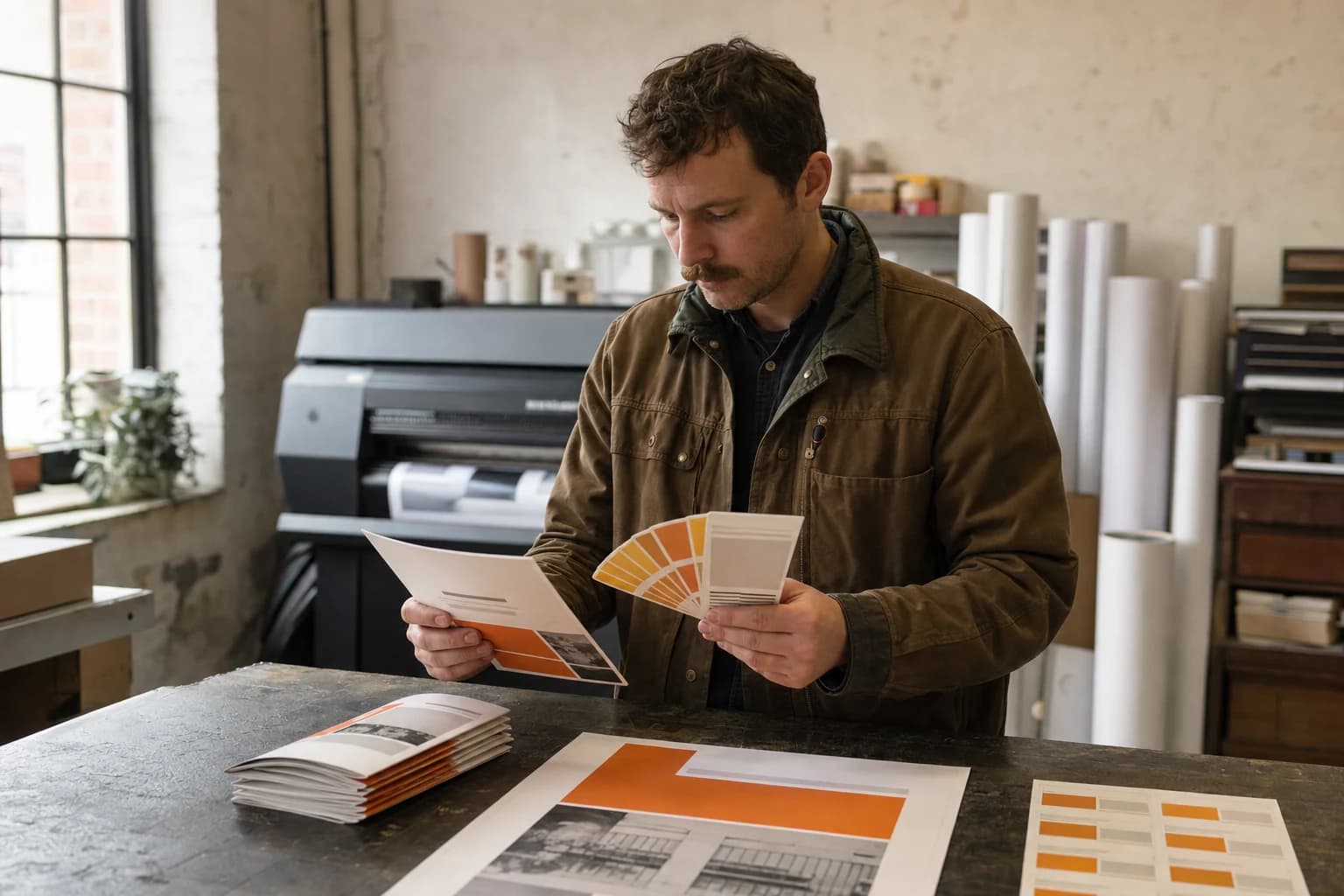
What ongoing design work does a growing business need?
Most local businesses need four things regularly: social graphics, print collateral such as forms, cards and leaflets, in-premises material such as signage and posters, and occasional presentation or proposal templates. The volume is modest and the requirement is constant.
The efficient way to handle it is templates built from your identity system, so routine items can be produced without a designer and only genuinely new work needs one.
The failure mode is not a lack of design skill. It is inconsistency: each item made by a different person in a different tool with a slightly different blue, which makes an established business look improvised.
Written and maintained by the VIS Mountain team. Last reviewed . The sources behind it are listed below.
The volume problem, not the skill problem
Very little ongoing design work is difficult. Almost all of it is repetitive, small, and needed at short notice, which is exactly the shape of work that gets done badly by whoever is free.
A seasonal offer graphic, a new staff member added to a board, a form reprinted with an updated address, a leaflet for an event next month. Individually trivial, collectively the thing that determines whether your business looks coherent.
The answer is not a designer on retainer producing everything from scratch. It is a small set of templates covering the items that repeat, built properly once, so that routine work stops needing a designer at all.
That leaves the genuinely new work, which is where design effort actually earns its place.
How the work is organised
The aim is to make as much of your recurring output as possible not require us.
Inventory what actually repeats
Most businesses are surprised by the list. Social post formats, appointment cards, intake forms, price lists, staff boards, window graphics, seasonal offers, van livery, uniform artwork, presentation decks. Knowing the list is half the job.
Build templates for the repeating items
Editable templates in a tool your team already uses, locked where it matters so the logo, colours and type cannot drift, editable where it does not so text and images can change.
- Locked brand elements, editable content areas
- Correct sizes for each platform and print requirement
- Built in the tool your team actually has, not one they will not open
Set up the asset library
One place holding the current logo files, photographs, and approved templates, with old versions removed rather than archived alongside. Most brand drift is somebody using an outdated file they found in an email.
See the remaining steps: How the work is organisedHide the remaining steps: How the work is organised
Handle the new work as it comes
Genuinely new material, seasonal campaigns, and anything requiring production knowledge such as large format printing or specialist finishes.
Prepare artwork properly for suppliers
Print and signage suppliers need specific things, and getting them wrong causes reprints. Correct colour mode, bleed, resolution, outlined fonts where required, and the right file format for the process being used.
Review periodically
Twice a year, look at what has actually been produced and check it against the system. Drift is gradual and easiest to correct while it is small.
A business that has done this properly produces most of its own routine material and calls a designer for the things that genuinely need one.
Why every piece starts from the same sheet
Most day to day graphic design is not invention. It is applying an existing brand correctly to a new object.
The rule that applies to design as well as websites
Text on a poster, a leaflet or a social graphic is subject to the same readability constraint as text on a screen, and the published standard is a useful benchmark even off the web.
SourceContrast and Color Accessibility, WebAIM, on the WCAG 2.1 minimum ratios
Light grey text on white is the most common design failure we correct, in print as well as on screen. It looks refined in a design tool and is difficult to read in a waiting room.
What to check before sending anything to print
Every item here has caused somebody an expensive reprint.
- Colour mode correct for the process being used, and spot colours specified where the supplier requires them.
- Bleed included where the design runs to the edge, usually a few millimetres beyond the trim.
- Resolution high enough at final size. An image that looks fine on screen may be a quarter of what a printer needs.
- Fonts embedded or outlined, so the supplier's system does not substitute something else.
- Text kept away from the trim and fold lines, because trimming is not perfect.
See the full checklist: What to check before sending anything to printHide the full checklist: What to check before sending anything to print
- The phone number, address and website checked by somebody who did not write them. This is the most common and most embarrassing error in print.
- A physical proof for anything being produced in quantity or at large size. Screens lie about colour.
- The correct logo version for the substrate, meaning a single colour version where the process requires one.
The phone number check is not a joke. Reprinting five thousand leaflets because of one transposed digit is a rite of passage nobody needs.
What the design cannot fix
Design makes a claim more prominent. It does not make it more defensible, and that distinction matters in regulated categories.
The Federal Trade Commission's truth in advertising rules apply to a poster in a waiting room exactly as they apply to a search advertisement. A results claim on a leaflet needs the same substantiation as one on a landing page. Before and after imagery carries the same expectations regardless of where it appears.
Read the full breakdown: What the design cannot fixHide the full breakdown: What the design cannot fix
In healthcare and aesthetics this is the single most common problem we are asked to design around, and the honest answer is usually to change the claim rather than the layout. A page that explains a process clearly outperforms one that promises an outcome, and it does not create a liability that outlives the campaign.
We will tell you when a piece of copy is a problem rather than laying it out and letting it become your problem later.
We do not publish a price for this piece of work on its own, because the right scope depends on what already exists. What is published is the bundle pricing: 2,400, 3,600 or 4,800 dollars a month depending on which channels are running. You can read the full breakdown on the pricing page, and you will get an exact number in writing before anything starts.
In-house, freelance or agency
For most local businesses the right answer is a combination rather than one of these.
| Item | Good for | Falls down on |
|---|---|---|
| Team using templates | Routine, high frequency, low risk items | Anything new or production sensitive |
| Freelance designer | Occasional project work at low cost | Availability, and consistency over time |
| Agency | Consistency, production knowledge, continuity | Cost, for genuinely trivial items |
| In-house designer | High volume, immediate turnaround | Only justified at real volume |
The combination that works for most businesses is templates for the routine, and someone accountable for consistency and for anything that goes to print.
What you should receive, and who owns it
Design work produces two kinds of file and you should get both. The editable source, which is what any future designer needs in order to change something, and the export, which is what you actually use. Receiving only exports means every future amendment goes back through whoever made it, which is a dependency rather than a deliverable.
For each item that means the layered source file, print ready exports at the correct colour mode and resolution, and web exports at the sizes you will use. Templates built for your team come as editable files in the tool they already have, not as a locked format only we can open.
Read the full breakdown: What you should receive, and who owns itHide the full breakdown: What you should receive, and who owns it
Ownership should be stated in writing before work starts rather than assumed afterwards. The design is yours to use, adapt and hand to another supplier. The one genuine exception is typefaces, which are licensed rather than owned: we will tell you which font, what licence is needed for the uses you have, and whose name it should be registered in, because a licence in an agency's name is not a licence you can keep.
The same applies to any photography or illustration used. Stock assets carry their own licence terms, and those terms travel with the file rather than with you, so we document what is licensed for what and at what scale.
How to judge design work
This is not a measurable discipline in the way a campaign is, and pretending otherwise produces bad metrics. There is no meaningful conversion rate for a staff board.
What can be judged is consistency, turnaround and whether the material does its job. Does everything look like it came from the same business. Does routine work get produced without waiting. Does the leaflet actually tell somebody what to do next, with a phone number large enough to read.
Where design sits on a page or an advertisement that is measured, it inherits that measurement. A landing page design is judged by conversion rate. A social graphic is judged by whether the post produced anything.
What we will not do is attach a fabricated performance figure to a piece of collateral. If a number cannot be sourced, it does not go in a report.
How this connects to the rest
This applies the identity system that brand identity work produces. Without that system, ongoing design is a series of individual judgement calls and drift is inevitable.
It supplies social media management with the visual material a consistent posting schedule needs, which is the highest volume application for most local businesses.
It overlaps with paid advertising, where creative for Meta and display campaigns is design work with a performance constraint attached.
And it touches web design, since the same system has to work on screen, where accessible contrast and legibility at small sizes are requirements rather than preferences.
Start with the list of things you make repeatedly.
Write down everything your business produces more than twice a year. That list is usually the whole brief, and most of it can be templated so you stop needing a designer for it.
Straight answers.
Can our team make their own graphics?
For routine items, yes, and they should. Templates built from your identity system with the brand elements locked let anybody produce a consistent social post or notice without design skill.
Anything going to print, anything at large format, and anything genuinely new is worth putting through someone who does this for a living.
What do you need from us for a print job?
The final text, checked by someone who did not write it, the finished size, the quantity, and the supplier's specification if you already have one.
The specification matters, because bleed, colour mode and resolution requirements differ by process and supplier, and guessing causes reprints.
Do we get the source files?
Yes. Editable source files and print ready exports, plus any templates built for your team.
This is worth confirming with any designer in advance. Receiving only a flattened export means every future change goes back through the same person.
Can you design something that makes a claim about results?
We can lay it out. Whether you should make the claim is the more important question, because the Federal Trade Commission's substantiation rules apply to a leaflet exactly as they do to an advertisement.
In regulated categories we will usually suggest changing the claim rather than the layout, and explain why.
How quickly can something be turned around?
It depends on the item, the queue and whether the content is ready, and we will not publish a turnaround time we cannot hold to on every job.
What we will do is agree a realistic date when the work is briefed. Templates exist precisely so the routine items do not have to wait for anybody.
Where this comes from.
Primary documentation and published research behind the guidance on this page.
- WCAG 2 checklist, WebAIM (opens in a new tab)A practical summary of the Level A and AA success criteria.
- WebAIM contrast checker and guidance (opens in a new tab)
- FTC truth in advertising (opens in a new tab)
- United States Patent and Trademark Office, trademark basics (opens in a new tab)
- Health Products Compliance Guidance, FTC (opens in a new tab)
Talk to the team
A short call, a look at how the business currently shows up, and a straight answer on what we would do first.